









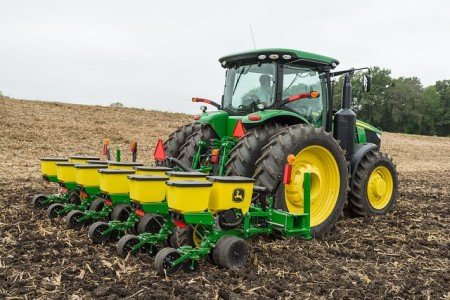
 1725 Planter Configurations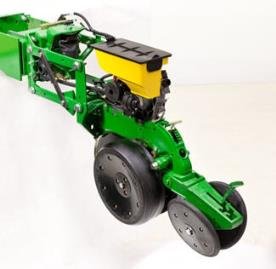
 Advance with MaxEmerge™ 5 advantages
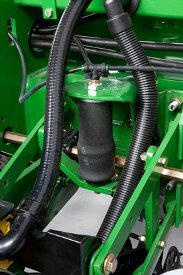 Pneumatic downforce system
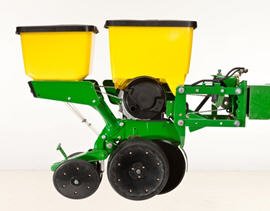
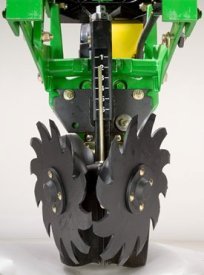 Row cleaner options to meet residue management needs
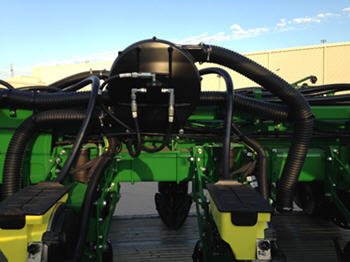 Vacuum system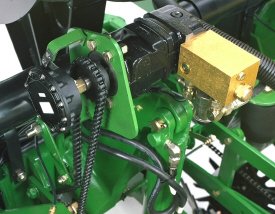
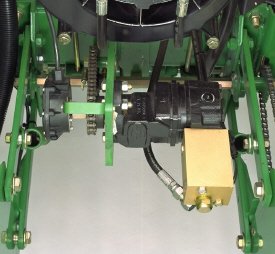 Seed variable-rate drive provides the ultimate planting productivity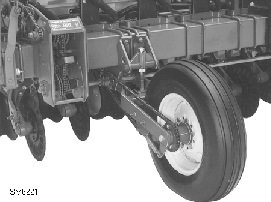
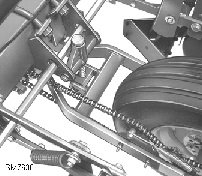 Ground-contact drive wheel
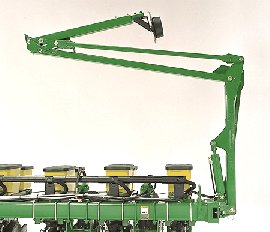 Variety of markers available to match planting needs
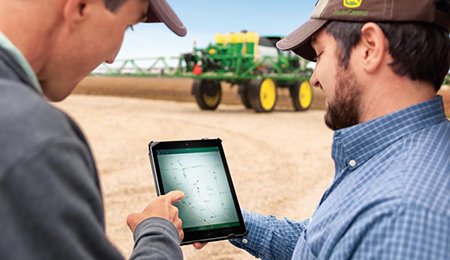 John Deere Connected Support™ prevents downtime and efficiently resolves issues with revolutionary technology-based solutions
- Monday 8:00AM - 5:00PM
- Tuesday 8:00AM - 5:00PM
- Wednesday 8:00AM - 5:00PM
- Thursday 8:00AM - 5:00PM
- Friday 8:00AM - 5:00PM
- Saturday Closed
- Sunday Closed
ID # 41370697
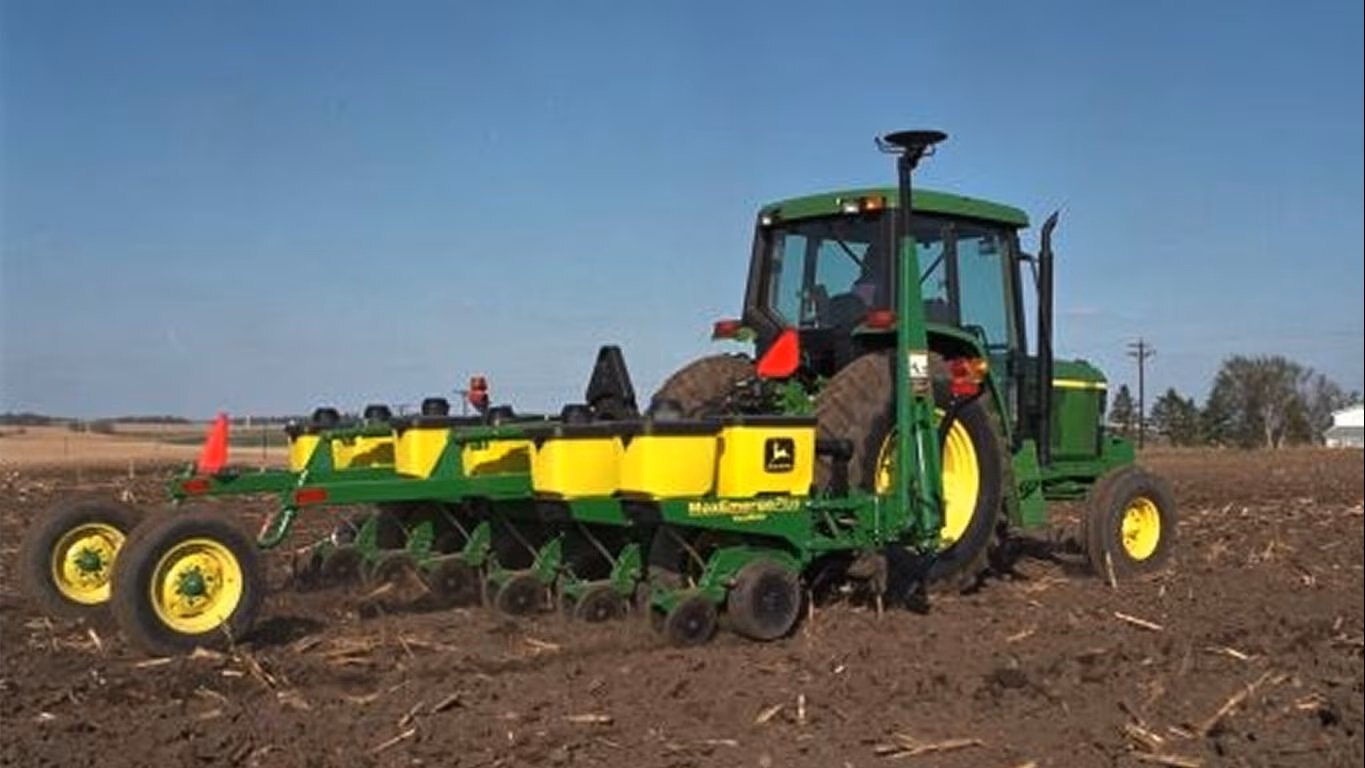
2025 John Deere 1705
Call for Price
Overview
Specifications
features
key specs
rows and row spacing
lift system
tires
row units
seed meters
drive system
markers
dimensions
additional information
literature
|
Model
Mounted Planters
Category Name
Agriculture
Year
2025
Sale Type
New
Manufacturer
John Deere
Features
|
The 1705 Planter is available in the following configurations:
Before placing an order, please reference the Build and Price tool for any recent revisions to the below information.
| |||||||||||||||||||||
|
MaxEmerge 5 bundles the best of MaxEmerge XP and Pro-Series™ XP row-units to give you a unique planter solution. With more options and configurations, you’ll get difference-making versatility that easily adapts to your ag management plan.
It starts with optimal seed population that drives yield potential. An improved double eliminated helps achieve your desired population with a ride range of crop sizes. Improved side-hill performance of up to ¼ degree ensures you receive the full value of each seed when planting on terraces or rolling terrain. The vacuum air source from the Central Commodity System (CCS™) tank in the meter provides a debris-free environment for increased meter efficiency. The MaxEmerge family of row-units have never seen a more versatile and efficient design until the MaxEmerge 5. The 5-family row-units improve productivity, increase uptime and lower the cost of ownership like never before.
The MaxEmerge 5 row-unit was designed for improved performance and serviceability. The vacuum meter system gently pulls and holds individual seeds to the holes of the seed disk for population control and spacing accuracy, equaling better crop stands and profit. Vacuum seed meters can plant a wide variety of crops and seed types by simply changing seed disks and adjusting vacuum level. Vacuum seed meters are available for planters with MaxEmerge 5 row-units.
Additional features of the vacuum seed meter include:
Vacuum meter hub and latching handle Both the MaxEmerge 5 vacuum meters are equipped with a heavy-duty hub spring and disk latching handle. The spring ensures the seed disk stays properly positioned when operating flat-style seed disks and higher vacuum levels. Proper seed disk positioning means repeatable seed singulation, time after time. The disk-latching handle is designed for easy operation and effortless seed disk changeover. The hub is also machined to tight tolerances to further ensure alignment of metering components. Double eliminator For difficult to singulate seeds, a flat seed disk and double eliminator is a viable alternative to traditional cell-type seed disks. By design, a flat seed disk requires higher levels of vacuum than a cell-type disk because there is no pocket or cell to hold the seed. The higher vacuum level will pull more than one seed to the holes in the seed disk. The double eliminator is set to cover a portion of the hole in the seed disk and is the mechanism to knock multiple seeds away as the disk rotates.
Double eliminators are required with flat-type seed disks only and should not be used with cell-type seed disks. The knockout wheel is also recommended in conjunction with the double eliminator and flat seed disk to ensure seed is ejected from the disk.
Flat and celled type seed metering disks are available to allow planting a wide variety of seed types.
Mini-hopper row-units, which are used only with the CCS, are compatible only with crops that the CCS is approved to plant.
| |||||||||||||||||||||
|
Pneumatic downforce provides convenient, simple adjustment of downforce for the whole planter from one location. The amount of downforce applied is infinitely adjustable from 0 kg to 181.4 kg (0 lb to 400 lb). Pneumatic downforce provides more consistent downforce throughout the range of row-unit travel than mechanical spring downforce systems.
System features Each row-unit has a single, rubber air bag located between the parallel arms. The air bags are hooked in parallel so that air can be added or released from all rows at once from one location. Pneumatic downforce systems are available as base equipment on all 1700 Series and DB Planters. The individual pneumatic downforce air bag assemblies, air compressor units, and 9.5-mm (3/8-in.) delivery lines are also available as an attachment for field conversion. An improved compressor is used to charge the pneumatic system. This compressor can be located on the planter frame or in the tractor cab if desired. A gauge at the compressor indicates the amount of downforce being applied.
From the factory, integral planter models with pneumatic downforce will have an improved air compressor assembly with an in-cab mounting bracket, except the 1725 16Row and 1725 Central Commodity System (CCS™) Twin-Row Planters which will have the air compressor assembly mounted on the planter frame. For drawn planter models, the 1755, 1765, 1765NT, 1775 Front-Fold, and 1785 Drawn Planters will have the air compressor assembly installed either on the outer hitch or wing frame members when the pneumatic downforce system is installed. | |||||||||||||||||||||
|
rop yields have increased through the years along with the amount of residue left in the field after harvest. At the same time, tillage practices have changed, including different tillage operations which maintain large amounts of surface residue, and even no-till practices. Row cleaners are an essential tool in managing this increased amount of residue.
John Deere seeding group offers a variety of row cleaner options to meet the needs of a producer's operation. Compatibility varies by model, row spacing, and other planter equipment. Screw-adjust, unit-mounted row cleaner The screw-adjust, unit-mounted row cleaner is mounted directly to the face plate of the row-unit, placing the ground engaging components just in front of the row-unit opener blades and depth gauge wheels. This close proximity allows the gauge wheels to control the depth of the row cleaner as well as the row-unit. This compact design also allows greater compatibility with fertilizer openers and other planter attachments.
SharkTooth® wheels are standard equipment on the unit-mounted row cleaner. The swept-tooth design of the wheel provides a clear path for the row-unit openers while resisting residue buildup on the wheel. The screw adjustment knob is accessible through the top of the parallel arms, providing convenient access for adjustments. The row cleaner can be adjusted in 1.6-mm (1/16-in.) increments, providing plenty of flexibility to meet the needs of changing conditions. Floating row cleaner with unit-mounted coulter The floating row cleaner allows a row cleaner to be used in conjunction with a unit-mounted coulter. This combination is often desired in heavy residue loads and reduced tillage planting conditions. The row cleaner provides a clear path for the row-unit, while the unit-mounted coulter helps penetrate tough soil conditions.
Accommodating the unit-mounted coulter means the residue wheels are farther forward from the row-unit face plate than in the case of the screw-adjust row cleaner. To maintain performance, this row cleaner has the capability to float above a defined minimum depth.
Standard depth-gauging bands on the wheels allow the row cleaner wheels to float independently of the row-unit openers, allowing both to perform in varying terrain. The unit may also be set in a fixed position by simply pinning through the bracket if desired. This row cleaner also features SharkTooth wheels as standard equipment.
The floating row cleaner and unit-mounted coulters are available on many planters as factory-installed equipment. NOTE: Screw-adjust row cleaners are not compatible with MaxEmerge™ 5e row-units with long parallel arms.
NOTE: DB models have the option for either unit-mounted coulter, screw-adjust row cleaners, or pneumatic row cleaners (only compatible with MaxEmerge 5e or equipped ExactEmerge™ models). The DB60T is only available with a less row cleaner option.
SharkTooth is a trademark of Yetter Manufacturing, Inc. | |||||||||||||||||||||
|
Vacuum blower assembly Vacuum is created by a hydraulically driven vacuum blower assembly mounted on the planter frame. The vacuum blower requires a tractor with a closed-center hydraulic system and a separate selective control valve (SCV). For tractors with open-center hydraulic system, a vacuum 540-rpm or 1000-rpm power take-off (PTO) driven hydraulic pump system is available. PTO pumps offered from the factory are limited to 15-row applications or less.
Different vacuum levels are required depending on the crop being planted. A hydraulic control valve lets the operator regulate vacuum blower speed, changing the vacuum level. On late-model John Deere tractors, vacuum levels are set from the tractor seat using the SCV controls. The control valve is not needed in those applications. At full flow, the system flows up to 18.9 L/min (5 gpm) per motor.
Convenient vacuum gauges located on the planter hitch give a visual indication of the vacuum level. When using a SeedStar™ monitor, the vacuum level can be displayed on the monitor. Consult the vacuum metering seed charts in the operator's manual for initial vacuum setting recommendations. Vacuum meter case drain All planters with vacuum metering systems have case drain motors on the vacuum blowers. Case drain lines will have a flush-face case drain coupler on the planter and will require a corresponding flush-face case drain coupler on the tractor. The flush-face coupler simplifies implement attachment by allowing operators to easily identify the case drain. The unique hose tip is unable to connect to another coupler on the tractor, ensuring the correct setup.
It is important to connect this case drain hose to prevent the continuous and complete draining of hydraulic fluid due to the relief feature that opens the coupler when the pressure reaches 68.9 kPa (10 psi). This relief feature is designed to protect the motor shaft seal if for any reason the case drain hose was not connected to the tractor. The flush-face hose tips have less back pressure than ISO case drain tips, and the flat surface makes these couplers easy to clean, providing less chance for contamination.
The case drain line is also used with all Central Commodity System (CCS™) fan motors. | |||||||||||||||||||||
|
Seed variable-rate drive provides the ultimate planting productivity by utilizing one, two, or three hydraulic motors (varies by model) to turn the seeding drive shaft. Hydraulic control of the seeding drive allows for on-the-go seeding rate changes right from the display mounted inside the tractor cab. Combine this seeding flexibility with the map-based planting option, and seeding rates adjust automatically based on the prescribed map.
Variable-rate drive offers the following advantages over common, ground, or contact-tire drive systems:
Single- or dual-motor systems for variable-rate drives are available for all John Deere planters except the 1785 Rigid Frame. Variable-rate drive is available as a factory-installed option for all applicable planter models. Single- or dual-motor systems are available as field-installed attachments for most planter models; however, a three-motor variable-rate drive field-installed attachment is not available. Seed variable-rate drive requires the SeedStar™ monitor and a radar input signal. Either tractor or planter radar may be used. Planter radar is ordered separately.
NOTE: Peanut seed meter disks require the variable-drive transmission | |||||||||||||||||||||
|
The ground-engaging drive wheel system is a simple, proven, and reliable way to power the seed transmission(s). As the drive wheel turns, power is transmitted through a single-pitch drive chain to the jack shaft, on to the seed transmission, and out to the seed meters. Slip-clutch protected, spring-loaded idlers and steel sprockets provide a smooth-operating, dependable chain drive.
The ground-contact drive system has the following common features:
| |||||||||||||||||||||
|
ohn Deere planters are equipped with a variety of marker designs, including non-folding, folding, fold-over, side-fold, and tri-fold markers.
Automatic or independent hydraulic alternation controls are available.
NOTE: Automatic alternation controls are not available on 1775NT 24-Row Planters.
Automatic control is connected to the planter lift system and provides automatic alternation when the planter is raised. This configuration is base equipment on the 1745 and1755 Planters.
Independent control is not connected to the planter lift system and provides automatic alternation of markers when a selective control valve (SCV) lever is activated. Independent markers require a separate tractor SCV. Independent markers are standard equipment on 1765, 1775NT, and 1795 Planters. Independent markers are optional on 1705, 1745 and 1755 Planters. Less marker option Hydraulic alternation provides the following capabilities depending on the type of marker control used:
| |||||||||||||||||||||
|
When you buy John Deere equipment, you expect reliability. You also know that problems can happen, and a product is only as good as the support behind it. That’s why John Deere equipment is prepared with technology that senses potential issues and can alert you and your dealer promptly—in the cab or anywhere you are. John Deere Connected Support is a revolutionary change to support that leverages technology and the connectivity of JDLink™ telematics to prevent downtime and resolve problems faster. These tools decrease downtime by an average of 20 percent, enabling faster responses to unexpected problems and reducing technician trips to your machine. For some issues, unplanned downtime can even be prevented altogether through prediction of the issue. With your permission, John Deere Connected Support:
With more than a decade of experience leveraging connectivity to solve problems, no one else has the experience, tools, and knowledge to keep you running as John Deere and your John Deere dealer can. Connected Support is an in-base feature on all John Deere products with factory- or field-installed JDLink. | |||||||||||||||||||||
Key Specs
| Number of rows | 6 |
|---|---|
| Row spacing | 91, 97, and 102 cm 36, 38, and 40 in. |
| Row unit seed hoppers | Capacity 58 or 106 L 1.6 or 3 bu |
| Seed Meters | Base Vacuum |
Rows And Row Spacing
| Number of rows | 6 |
|---|---|
| Row spacing | 91, 97, and 102 cm 36, 38 and 40 in. |
Lift System
| Type | Integral or semi-integral |
|---|
Tires
| Base | 7.60-15 6 Ply - Traction: 280 kPa 2.8 bar 40 psi 7.60-15 8 Ply - Traction: 359 kPa 3.6 bar 52 psi |
|---|
Row Units
| Type | MaxEmerge™ 5 row unit |
|---|---|
| Opener | Tru-Vee double disk |
| Row unit seed hoppers | Capacity 58 or 108 L 1.6 or 3 bu |
Seed Meters
| Base | Vacuum |
|---|
Drive System
| Base | Ground driven or hydraulic driven |
|---|
Markers
| Type | Automatic alternating or independent control |
|---|
Dimensions
| ransport width (with markers) | 7036 mm 277 in. |
|---|---|
| Transport width (without markers) | 5842 mm 230 in. |
| Transport length | 3378 mm 133 in. |
| Transport weight | 1490 kg 3280 lb |
Additional Information
| Recommended tractor horsepower | Hydraulic oil required to operate the planter: 5.7 L 1.5 gal. Hydraulic system working pressure: 20,684 kPa 207 bar 3000 psi Hydraulic system burst pressure: 82,737 kPa 827 bar 12,000 psi |
|---|
Literature
Name |
Link |
| View Product Brochure | Download |
Model
Mounted Planters
Category Name
Agriculture
Year
2025
Sale Type
New
Manufacturer
John Deere
Quantity
0